Summary

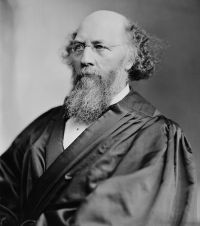
Portrait of Stephen Johnson Field Stephen Johnson Field New York Life Insurance Company v…

To hold the principal responsible for his acts, and assist in the consummation of the fraud, would be monstrous injustice. When an agent is apparently acting for his principal, but is really acting for himself or third persons, and against his principal, there is no agency in respect to that transaction, at least as between the agent himself, or the person for whom he is really acting, and the principal.
Source: Wikisource

Portrait of Stephen Johnson Field Stephen Johnson Field New York Life Insurance Company v…

Contracts could not be made, or business fairly conducted, if such a rule should prevail; and there is no reason why it should be applied merely to contracts of insurance. There is nothing in their nature which distinguishes them in this particular from others. But here the right is asserted to prove, not only that the assured did not make the statements contained in his answers, but that he never read the application, and to recover upon a contract obtained by representations admitted to be false, just as though they were true.
Source: Wikisource

Portrait of Stephen Johnson Field Stephen Johnson Field New York Life Insurance Company v…

In other words, the jury were told that the assured might take to himself the benefit of the fraud without responsibility for it, if he did not discover it until after it was consummated, a doctrine without authority, and wholly indefensible. No one can claim the benefit of an executory contract fraudulently obtained, after the discovery of the fraud, without approving and sanctioning it.
In American Ins. Co. v. Neiberger, 74 Mo. 167, the assured agreed with the agent of the company that the policy to be issued should contain a clause giving him a right to cancel it at the end of the year.
Source: Wikisource

Get perspective with Kwize: daily news enlightened by great literature