Summary

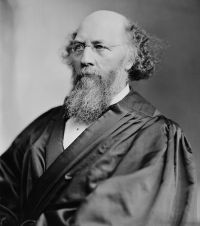
Portrait of Stephen Johnson Field Stephen Johnson Field White v. Cannon — Opinion of the Court

The reservation allows a judicial inquiry into the merits of opposing claims to the land. Now there could be no opposing claims to land situated like the premises in suit, the legal title of which was in the United States, and with reference to which no promise of title had been made to others by the government, unless such claims arose from conflicting evidence respecting the residence and cultivation of different parties.
Source: Wikisource

Portrait of Stephen Johnson Field Stephen Johnson Field White v. Cannon — Opinion of the Court

Such being, in our judgment, the true intent and meaning of the reservation, the case presented can be readily disposed of. It becomes then the ordinary case of a party acquiring, by false and fraudulent means, a legal title to property to which another has the better right, and which he would have obtained, had the facts, as they existed, been truly represented. In such case equity will compel the holder of the legal title to transfer it to the party who was justly entitled thereto.
Source: Wikisource

Portrait of Stephen Johnson Field Stephen Johnson Field White v. Cannon — Opinion of the Court

Nor can the position of the claimant, Edward McLaughlin, or of the plaintiff claiming under him, be assimilated to that of a person who has acquired a pre-emptive right to the land, or any other inchoate right, which entitles him, under the law, to be preferred by the government in the disposition of the legal title, and upon the equity of which he can compel any person, subsequently acquiring that title, to hold it for his benefit.
Source: Wikisource

Get perspective with Kwize: daily news enlightened by great literature