Summary

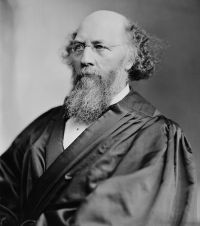
Portrait of Stephen Johnson Field Stephen Johnson Field Wisconsin Central Company v. Price County…

It is familiar law that a state has no power to tax the property of the United States within its limits. This exemption of their property from state taxation-and by state taxation we mean any taxation by authority of the state, whether it be strictly for state purposes or for mere local and special objects-is founded upon that principle which inheres in every independent government, that it must be free from any such interference of another government as may tend to destroy its powers or impair their efficiency.
Source: Wikisource

Portrait of Stephen Johnson Field Stephen Johnson Field Wisconsin Central Company v. Price County…

Suppose the officers of the government had sold a tract of land, received the purchase money, and issued a patent certificate. Can it be contended that they could sell it again, and convey a good title? They could no more do this than they could sell land a second time which had been previously patented. When sold, the government, until the patent shall issue, holds the mere legal title for the land in trust for the purchaser; and any second purchaser would take the land charged with the trust.' In Witherspoon v Duncan, 4 Wall.
Source: Wikisource

Portrait of Stephen Johnson Field Stephen Johnson Field Wisconsin Central Company v. Price County…

The land in the hands of the purchaser is real estate, descends to his heirs, and does not go to his executors or administrators.' And again: 'Lands which have been sold by the United States can in no sense be called the property of the United States. They are no more the property of the United States than lands patented. So far as the rights of the purchaser are considered, they are protected under the patent certificate as fully as under the patent.
Source: Wikisource

Get perspective with Kwize: daily news enlightened by great literature