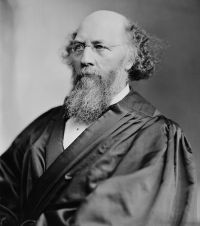
 Stephen Johnson Field,
Wood v. Railroad Company — Opinion of the Court
Stephen Johnson Field,
Wood v. Railroad Company — Opinion of the Court
“ Nearly all the land within the distance usually prescribed as a limit had already been disposed of to another railroad company, or, from the general settlement of the country, was likely to be appropriated before the line of the road could be definitely located. In order, therefore, that its proposed aid might not be defeated, Congress allowed the land granted to be taken on the line of the road wherever it could be found, without regard to the distance from its line to which the grantee might be compelled to go to satisfy its grant, by reason of previous appropriations. ”
