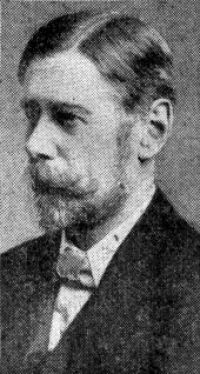
Stephen Lucius Gwynn

Stephen Lucius Gwynn

Summary

Portrait of Stephen Lucius Gwynn Stephen Lucius Gwynn Leinster

Surely earth has not many things to show more fair. Yet when you climb the hill (a tram will take the infirmer) and first see eastward over the wide blue, then, gradually ascending, get sight of Dublin Bay’s southern shore with the Wicklow Mountains behind it, and finally of Dublin itself, lying between beauty and beauty—beauty of sea, beauty of plain, beauty of mountain, beauty of azure, of purple, of green—then, I think, the southward view will seem to you richer in variety and incident.
Source: Gutenberg

Portrait of Stephen Lucius Gwynn Stephen Lucius Gwynn Leinster

So the twilight comes down, the light lessens in the west, and the wide landscape is wrapt in deep and solemn gloom, as though it had been a land in which man’s presence was unknown. While yet the sun was high in heaven, the missionary had quitted his boat in the estuary of the River Boyne, and had passed on foot along the river valley towards the interior of Meath. Evening found the little band encamped upon a grassy ridge on the north side of the Boyne, and overlooking the winding channel of that river. To the south, some miles away, the hill of Tara was in sight.
Source: Gutenberg

Portrait of Stephen Lucius Gwynn Stephen Lucius Gwynn Leinster

And while we talk of flowers, another sight you can see from Dublin in May, the like of which takes visitors to Holland—the great daffodil and tulip fields at Rush, some fifteen miles north along the coast. There, growing in among the pale sandhills and grey bent, you shall see these huge patches of trumpeting colour—acres of tulips, close ranged like soldiers on parade, all of one type, uniform in their perfection. And with that you can inspect an industry employing many workmen and workwomen throughout the year in a country where work is none too plenty.
Source: Gutenberg

Get perspective with Kwize: daily news enlightened by great literature