Summary

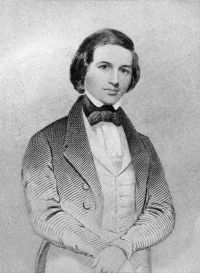
Portrait of T. S. Arthur T. S. Arthur The power of kindness and other stories (1877)

You have weapons that will prevail. Try to forget the fault of William; try to excuse him; think of his good qualities; and assure yourself of what I know to be true—that he never meant to offend you. If the angry wolf growl in your bosom, thrust bravely at him, as you would, were you, weapon in hand, defending a sheepfold; and he will and must retire, or die at your feet. Then innocent lambs will again be seen, and their sports delight your heart. Then you will feel no more anger towards your young friend, but love instead.”
“I don’t think I am angry with William, mother,” Alfred said.
Source: Gutenberg

Portrait of T. S. Arthur T. S. Arthur The power of kindness and other stories (1877)

But Arthur was silent.
“Speak, sir!” said the father sternly. “Did you pull the flowers?”
“Yes, sir.”
“And then falsely accused your brother of the wrong you had done. That my boy should be guilty of an evil act like this! I could not have believed it. It is a wicked thing to tell a lie to hide a fault, simply; but falsely to accuse another of what we have ourselves done, is still more wicked. Can it be possible that a son of mine has fallen so low? It grieves me to the heart.”
Source: Gutenberg

Portrait of T. S. Arthur T. S. Arthur The power of kindness and other stories (1877)

But all good affections, let it be remembered, as well as all evil affections, represent themselves in the face, and picture themselves in the eyes; and there is, besides, a sphere of what is good or evil about every one, according to the heart’s affections—just as the sphere of a rose is around the flower in its odour, showing its quality. Animals, as well as human beings, can read, by a kind of instinct, the good or evil of any one in his face, and perceive, by a mysterious sense, the sphere of good or evil that surrounds him.
Source: Gutenberg

Get perspective with Kwize: daily news enlightened by great literature