Summary

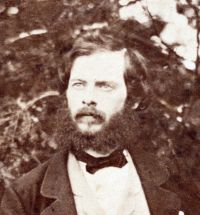
Portrait of Theodore Winthrop Theodore Winthrop The Canoe and the Saddle — Chapter XI

The nauseous, brisk, pen-behind-the-ear manner of the thriving tradesman, competitor with everything and everybody, would disgust an Indian even to the scalping point. Owhhigh, visiting my quarters at Squally with his fugue of beggars, praying me to breech his breechless, shirt his shirtless, shoe his shoeless child, treated me with a calm loftiness, as if I were merely a steward of his, or certainly nothing more than a co-potentate of the world’s oligarchy.
Source: Wikisource

Portrait of Theodore Winthrop Theodore Winthrop The Canoe and the Saddle — Chapter XI

They could have inevitably but small success in proselyting, and rarely any society except the savage dignity of Kamaiakan, the savage vigor of Skloo, and the savage cleverness of Owhhigh. A tame lustrum for my hosts, varied only by summer migrations to the Atinam and winter abode on the Yakimah. If the object of a man’s life were solely to produce effect upon other men, and only mediately upon himself, one would say that the life of a cultivated and intellectual missionary, endeavoring to instruct savages in the complex and transitional dogmatisms of civilization, was absolutely wasted.
Source: Wikisource

Portrait of Theodore Winthrop Theodore Winthrop The Canoe and the Saddle — Chapter XI

The rattlesnake had died just on the edge of the Atinam ridges, and Kpawintz was still brandishing his yellow and black prey, and snapping the rattle about the flanks of his wincing roan, when Uplintz called me to look with him up into the streaming sunshine, and see Le Play House.
A strange and unlovely spot for religion to have chosen for its home of influence. It needed all the transfiguring power of sunset to make this desolate scene endurable.
Source: Wikisource

Get perspective with Kwize: daily news enlightened by great literature