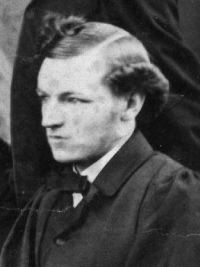
Thomas Erskine Holland

Thomas Erskine Holland

Summary

Portrait of Thomas Erskine Holland Thomas Erskine Holland 1911 Encyclopædia Britannica, Volume 11… (1911)

GENTILI, ALBERICO (1552–1608) , Italian jurist, who has great claims to be considered the founder of the science of international law, second son of Matteo Gentili, a physician of noble family and scientific eminence, was born on the 14th of January 1552 at Sanginesio, a small town of the march of Ancona which looks down from the slopes of the Apennines upon the distant Adriatic.
Source: Wikisource

Portrait of Thomas Erskine Holland Thomas Erskine Holland 1911 Encyclopædia Britannica, Volume 11… (1911)

The English committee, under the honorary presidency of Prince Leopold, in 1877 erected a monument to the memory of Gentili in St Helen’s church, and saw to the publication of a new edition of the De Jure Belli. The Italian committee, of which Prince (afterwards King) Humbert was honorary president, was less successful. It was only in 1908, the tercentenary of the death of Alberico, that the statue of the great heretic was at length unveiled in his native city by the minister of public instruction, in the presence of numerous deputations from Italian cities and universities.
Source: Wikisource

Portrait of Thomas Erskine Holland Thomas Erskine Holland 1911 Encyclopædia Britannica, Volume 11… (1911)

His faults are not few. His style is prolix, obscure, and to the modern reader pedantic enough; but a comparison of his greatest work with what had been written upon the same subject by, for instance, Belli, or Soto, or even Ayala, will show that he greatly improved upon his predecessors, not only by the fulness with which he has worked out points of detail, but also by clearly separating the law of war from martial law, and by placing the subject once for all upon a non-theological basis.
Source: Wikisource

Get perspective with Kwize: daily news enlightened by great literature