Summary

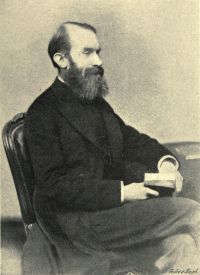
Portrait of Thomas Kelly Cheyne Thomas Kelly Cheyne 1911 Encyclopædia Britannica, Volume 15… (1911)

As an answer Yahweh “appoints” a small quickly-growing tree with large leaves (the castor-oil plant) to come up over the angry prophet and shelter him from the sun. But the next day the beneficent tree perishes by God’s “appointment” from a worm-bite. Once more God “appoints” something; it is the east wind, which, together with the fierce heat, brings Jonah again to desperation. The close is fine, and reminds us of Job. God himself gives short-sighted man a lesson. Jonah has pitied the tree, and should not God have pity on so great a city?
Source: Wikisource

Portrait of Thomas Kelly Cheyne Thomas Kelly Cheyne 1911 Encyclopædia Britannica, Volume 15… (1911)

The narrator considered that Israel had to be a prophet to the “nations” at large, that Israel had, like Jonah, neglected its duty and for its punishment was “swallowed up” in foreign lands. God had watched over His people and prepared its choicer members to fulfil His purpose. This company of faithful but not always sufficiently charitable men represented their people, so that it might be said that Israel itself (the second Isaiah’s “Servant of Yahweh”—see Isaiah) had taken up its duty, but in an ungenial spirit which grieved the All-merciful One.
Source: Wikisource

Portrait of Thomas Kelly Cheyne Thomas Kelly Cheyne 1911 Encyclopædia Britannica, Volume 15… (1911)

Two results of criticism are widely accepted. One relates to the psalm in ch. ii., which has been transferred from some other place; it is in fact an anticipatory thanksgiving for the deliverance of Israel, mostly composed of phrases from other psalms. The other is that the narrative before us is not historical but an imaginative story (such as was called a Midrash) based upon Biblical data and tending to edification.
Source: Wikisource

Get perspective with Kwize: daily news enlightened by great literature