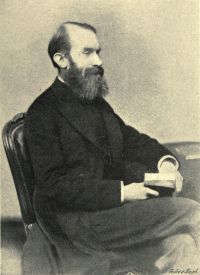
Thomas Kelly Cheyne

Biographical details

Portrait of Thomas Kelly Cheyne Thomas Kelly Cheyne,  1911 Encyclopædia Britannica (1911)

“ But what interests us most is not the name, but the conception and its imaginative vehicle. The conception is the original god likeness of human nature, and the necessity of expecting a closer union between God and man in the future than is possible at present. The imaginative form which this conception takes is that before the present condition arose man dwelt near to God in God’s own mountain home, and that when the mischief wrought by “the serpent” has been undone, man—or more strictly the true Israel—shall once more be admitted to his old privilege. ”
Source: Wikisource

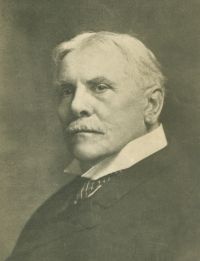
Portrait of Thomas Kelly Cheyne Thomas Kelly Cheyne,  1911 Encyclopædia Britannica, Volume 15… (1911)

“ As an answer Yahweh “appoints” a small quickly-growing tree with large leaves (the castor-oil plant) to come up over the angry prophet and shelter him from the sun. But the next day the beneficent tree perishes by God’s “appointment” from a worm-bite. Once more God “appoints” something; it is the east wind, which, together with the fierce heat, brings Jonah again to desperation. The close is fine, and reminds us of Job. God himself gives short-sighted man a lesson. Jonah has pitied the tree, and should not God have pity on so great a city? ”
Source: Wikisource

Portrait of Thomas Kelly Cheyne Thomas Kelly Cheyne,  1911 Encyclopædia Britannica, Volume 7… (1911)

“ Creation out of nothing is nowhere thought of, for this is not at all a simple idea. The pre-existence of world-matter is assumed; sometimes too that of heaven, as the seat of the earth-maker, and that of preternatural animals, his coadjutors. The earth-making process may, among the less advanced races, be begun by a bird, or some other animal (whence the term “theriomorphism”) , for the high idea of a god is impossible, till man has fully realized his own humanity. ”
Source: Wikisource

Get perspective with Kwize: daily news enlightened by great literature