Summary

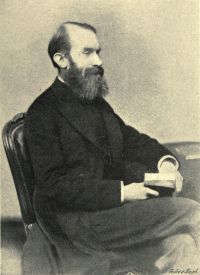
Portrait of Thomas Kelly Cheyne Thomas Kelly Cheyne 1911 Encyclopædia Britannica, Volume 15… (1911)

How can a man like Jeremiah have advocated any such panacea? He was indeed not at first a complete pessimist, but to be a preacher of Deuteronomy required a sanguine temper which a prophet of the school of Isaiah could not possess. Besides, there is a famous passage (viii. 8, see R.V.) in which Jeremiah delivers a vehement attack upon the “scribes” (or, as we might render, “bookmen”) and their “false pen.” If, as Wellhausen and Duhm suppose, this refers to Deuteronomy (i.e. the original Deuteronomy) , the incorrectness of the theory referred to is proved.
Source: Wikisource

Portrait of Thomas Kelly Cheyne Thomas Kelly Cheyne 1911 Encyclopædia Britannica, Volume 15… (1911)

That he cannot find a single just and honest man; that high and low, rich and poor, are all ignorant of the true method of worshipping God (“the way of Yahweh,” v. 4) . It would seem as if Anathoth were less corrupt than the capital, the moral state of which so shocked Jeremiah. And yet he does not really go beyond the great city-prophet Isaiah who calls the men of Jerusalem “a people of Gomorrah” (i. 10) .
Source: Wikisource

Portrait of Thomas Kelly Cheyne Thomas Kelly Cheyne 1911 Encyclopædia Britannica, Volume 15… (1911)

It is true that commercial prosperity had put a severe strain on the old morality, and that contact with other peoples, as well as the course of political history, had appeared to lower the position of the God of Israel in relation to other gods. Still, some adherents of the old Israelitish moral and religious standards must have survived, only they were not to be found in the chief places of concourse, but as a rule in coteries which handed on the traditions of Amos and Isaiah in sorrowful retirement.
Source: Wikisource

Get perspective with Kwize: daily news enlightened by great literature