Summary

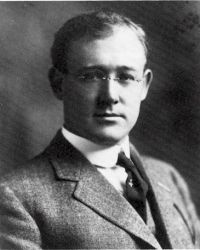
Portrait of Will Irwin Will Irwin The City That Was: A Requiem of Old San Francisco

In the long spaces between these winter storms, there is a temperature and a feeling in the air much like that of Indian summer in the East. January is the month when the roses are at their brightest.
So much for the strange climate, which invites out of doors and which has played its part in making the character of the people. The externals of the city are—or were, for they are no more—just as curious. One usually entered San Francisco by way of the Bay. Across its yellow flood, covered with the fleets from the strange seas of the Pacific, San Francisco presented itself in a hill panorama.
Source: Gutenberg

Portrait of Will Irwin Will Irwin The City That Was: A Requiem of Old San Francisco

In this parade of tall, deep bosomed, gleaming women, one caught the type and longed, sometimes for the sight of a more ethereal beauty—for the suggestion of soul within which belongs to a New England woman on whom a hard soil has bestowed a grudged beauty—for the mobility, the fire, which belongs to the Frenchwoman. The second generation of France was in this crowd, it is true; but climate and exercise had grown above their spiritual charm a cover of brilliant flesh.
Source: Gutenberg

Portrait of Will Irwin Will Irwin The City That Was: A Requiem of Old San Francisco

There is a race feeling against the Chinese among the working people of San Francisco, and no white man, except the very lowest outcasts, lived in the quarter.
On the slopes of Telegraph Hill dwelt the Mexicans and Spanish, in low houses, which they had transformed by balconies into a semblance of Spain. Above, and streaming over the hill, were the Italians. The tenement quarter of San Francisco shone by contrast with those of Chicago and New York, for while these people lived in old and humble houses they had room to breathe and an eminence for light and air.
Source: Gutenberg

Get perspective with Kwize: daily news enlightened by great literature