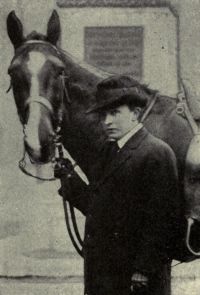
Will Levington Comfort

Will Levington Comfort

Summary

Portrait of Will Levington Comfort Will Levington Comfort Somewhere south in Sonora (1925)

Elbert was abroad in the streets of Tucson, long before the city was astir, his train having set him down at an unseemly hour. He passed a harness shop and peered in through the window, where his eye encountered the cocked ears and pointed head of a wooden horse. Evidently its place was the sidewalk, daytimes, being wheeled into the shop at closing-hour on castors.
It was as if he were in the Plaza at Los Angeles again. It was more: like a man coming back to find his old nursery unchanged. Elbert’s lips moved.
‘Wouldn’t Mamie shy if she passed that palfrey on a lonely road?’
His hand pained.
Source: Gutenberg

Portrait of Will Levington Comfort Will Levington Comfort Somewhere south in Sonora (1925)

The reverberations of the second shot having died away, Elbert was conscious of a faint aroma, as if all the dried fruits and tubers and woodwork had blent in enticing fragrance. A horse nickered from afar down the street and their three ponies at the hitching-rail raised their heads—Mamie’s instant answer being ramified by Chester’s dignified head-tones, and a shrill broken pipe from the ‘Indian.’ A kind of union and interplay in all things—glint of drift and daring in Cal Monroid’s eyes. The little fat man was shaking his match box. It really wouldn’t do for the lamp to be lighted just yet.
Source: Gutenberg

Portrait of Will Levington Comfort Will Levington Comfort Somewhere south in Sonora (1925)

A sudden passion mounted in him to turn north right now; to ride straight north, crossing the Border with Bart, yonder in the mountains where there were no roads; to find himself in the States with Bart, asking the way to San Forenso; after that, the trail west to the cabin, his mind finishing the picture in a flash—with Mamie and the sorrel safe in the corral. The deep laughing voice at his left:
‘I guess when you take a job, you try to see it through, don’t you?’
‘Yes,’ said Elbert in fainter tone. He was deeply drawn to the man he had come for.
Source: Gutenberg

Get perspective with Kwize: daily news enlightened by great literature