Summary

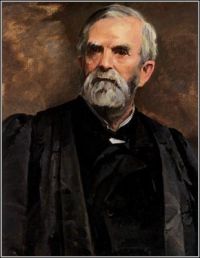
Portrait of William Burnham Woods William Burnham Woods Cutler v. Kouns — Opinion of the Court

The general purpose of congress in the passage of that act appears plainly to have been to give a degree of protection to all persons acting during the rebellion under authority of the president or congress of the United States. A construction which gives the benefit of one of its provisions to parties charged with offenses against the person, and not to those charged with wrongs and trespasses to the property of the citizen, robs the act of a great part of its intended effect, and is clearly unsound and untenable.
Source: Wikisource

Portrait of William Burnham Woods William Burnham Woods Cutler v. Kouns — Opinion of the Court

If he should be compelled to return it to the defendants in error, the United States would, in justice and honor, be bound to make him whole. The suit is therefore, in substance and effect, an action brought by the defendants in error against the government to recover the money collected by its officers and paid into its treasury, and is to be considered in that light. We think the money sued for is the money of the United States. When the cotton reached New Orleans on June 6th it was subject to an exaction of one-fourth its market value in New York.
Source: Wikisource

Portrait of William Burnham Woods William Burnham Woods Cutler v. Kouns — Opinion of the Court

But until the restrictions upon the removal of cotton produced west of the Mississippi had been repealed, such cotton, if removed from the place where it was grown, would, while the restrictions were in force, remain subject thereto, no matter what might be the regulations concerning the products of the place to which it was removed. The proclamation of June 13th refers to places declared to be in insurrection, and annuls restrictions placed upon the removal from such places of the products thereof.
Source: Wikisource

Get perspective with Kwize: daily news enlightened by great literature