Summary

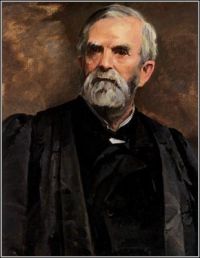
Portrait of William Burnham Woods William Burnham Woods Sharp v. Stamping Company — Opinion of the Court

Upon a consideration of all the evidence we are satisfied that the invention of Lazear was new and original, and had not been anticipated by the patents of Teller or Shaw, or the gas-stove made by Shaw in 1856.
The invention, it is admitted, has been infringed by the defendant. The evidence places its utility beyond question. Being novel and useful, and protected by the letters-patent issued to Lazear, the defendant should account to the complainant for the gains and profits derived by it from the infringement of the Lazear patent.
Source: Wikisource

Portrait of William Burnham Woods William Burnham Woods Sharp v. Stamping Company — Opinion of the Court

This apparatus was not contrived to accomplish the ends which Lazear's letters-patent had in view, nor was it an equivalent of his apparatus. Instead of dividing the volume of flame into two sheets, by which a steak could be broiled simultaneously on both sides, both sides being equally exposed to the flame and heat, it admitted the flames to the cooking-chamber in the form of a hollow cylinder. The steak, therefore, suspended from the top of the cooking-chamber would not be equally exposed to the flame and heat. The edge of the steak would be cooked more rapidly than the other portions.
Source: Wikisource

Portrait of William Burnham Woods William Burnham Woods Sharp v. Stamping Company — Opinion of the Court

By means of thin deflectors and the arrangement of the steak-holder, the broiler-chamber and the burners, the inventor claimed to be able to obtain a more equal distribution of the heat within the heating-chamber, with less liability of burning the steak and a better chance of collecting the gravy, than when the steak-holder was placed horizontally over the burners.
Source: Wikisource

Get perspective with Kwize: daily news enlightened by great literature