Summary

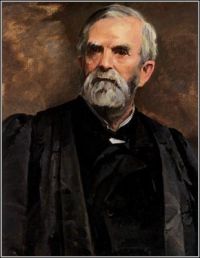
Portrait of William Burnham Woods William Burnham Woods Taylor v. Mayo — Opinion of the Court

Of course, when a trustee acts in good faith for the benefit of the trust, he is entitled to indemnify himself for his engagements out of the estate in his hands, and for this purpose a credit for his expenditures will be allowed in his accounts by the court having jurisdiction thereof. If a trustee contracting for the benefit of a trust wants to protect himself from individual liability on the contract he must stipulate that he is not to be personally responsible, but that the other party is to look solely to the trust estate.
Source: Wikisource

Portrait of William Burnham Woods William Burnham Woods Taylor v. Mayo — Opinion of the Court

When an agent contracts in the name of his principal, the principal contracts, and is bound, but the agent is not. When a trustee contracts as such, unless he is bound, no one is bound, for he has no principal. The trust estate cannot promise; the contract is therefore the personal undertaking of the trustee. As a trustee holds the estate, although only with the power and for the purpose of managing it, he is personally bound by the contracts he makes as trustee, even when designation himself as such.
Source: Wikisource

Portrait of William Burnham Woods William Burnham Woods Taylor v. Mayo — Opinion of the Court

The declaration of trust expressed fully the powers and duties of the trustees, and the contract sued on did not and could not modify it. The defendant in error did not sue as a cestui que trust, or base her claim on any trust, express or implied, undertaken by the plaintiffs in error, for her benefit. A trustee is not an agent. An agent represents and acts for his principal, who may be either a natural or artificial person. A trustee may be defined generally as a person in whom some estate interest or power in or affecting property is vested for the benefit of another.
Source: Wikisource

Get perspective with Kwize: daily news enlightened by great literature