Summary

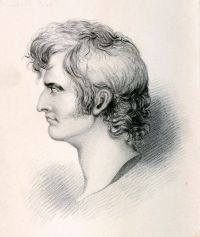
Portrait of William Francis Patrick Napier William Francis Patrick Napier History of the war in the Peninsula and in the south of France from the year 1807 to the year 1814… (1836)

Here was a noble army driven like sheep before prowling wolves, yet in every action the inferior generals had been prompt and skilful, the soldiers brave, ready and daring, firm and obedient in the most trying circumstances of battle. Infantry, artillery, and cavalry, all were excellent and numerous, and the country strong and favourable for defence; but that soul of armies, the mind of a great commander was wanting, and the Esla, the Tormes, the Duero, the Carion, the Pisuerga, the Arlanzan, seemed to be dried up, the rocks, the mountains, the deep ravines to be levelled.
Source: Gutenberg

Portrait of William Francis Patrick Napier William Francis Patrick Napier History of the war in the Peninsula and in the south of France from the year 1807 to the year 1814… (1836)

How did Massena dislodge Wellington from Busaco? How did Marmont turn him on the Guarena in 1812? How did Wellington himself turn the French on the Douro and on the Ebro in 1813? And above all how did he propose to turn Torres Vedras by the very march in question, seeing that from Torres Vedras to Mafra is only twelve miles and from Vimiero to Mafra is nineteen miles, the roads leading besides over a river and through narrow ways and defiles? But who ever commended such dangerous movements, if they were not masked or their success insured by some peculiar circumstances, or by some stratagem?
Source: Gutenberg

Portrait of William Francis Patrick Napier William Francis Patrick Napier History of the war in the Peninsula and in the south of France from the year 1807 to the year 1814… (1836)

It is certainly a great thing to fight a great battle; and against such a general as Wellington, and such troops as the British, a man may well be excused, if he thinks twice, ere he puts his life and fame, and the lives and fame of thousands of his countrymen, the weal or woe of nations, upon the hazard of an event, which may be decided by the existence of a ditch five feet wide, or the single blunder of a single fool, or the confusion of a coward, or by any other circumstance however trivial.
Source: Gutenberg

Get perspective with Kwize: daily news enlightened by great literature