Summary

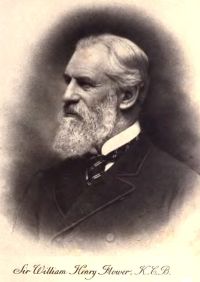
Portrait of William Henry Flower William Henry Flower 1911 Encyclopædia Britannica, Volume 17… (1911)

It is almost impossible to describe the colour of the marten, except in general terms, without going into the details of the endless diversities occasioned by age, sex, season, or other incidents. The animal is ‘brown,’ of a shade from orange or tawny to quite blackish; the tail and feet are ordinarily the darkest, the head lightest, often quite whitish
Source: Wikisource

Portrait of William Henry Flower William Henry Flower 1911 Encyclopædia Britannica, Volume 17… (1911)

Though all yield fur of serviceable quality, the commercial value varies immensely, not only according to the species from which it is obtained, but according to individual variation, depending upon age, sex, season, and other circumstances. The skins from northern regions are more full and of a finer colour and gloss than those from more temperate climates, as are those of animals killed in winter compared to the same individuals in summer. Fashion has, moreover, set fictitious values upon slight shades of colour.
Source: Wikisource

Portrait of William Henry Flower William Henry Flower 1911 Encyclopædia Britannica, Volume 17… (1911)

The female makes her nest of moss, dried leaves and grass in the hollow of a tree, but sometimes in a hole among rocks or ruined buildings, and produces several young at a birth, usually from four to six. Though wild and untameable to a great degree if captured when fully grown, if taken young they are docile, and have frequently been made pets, not having the strong unpleasant odour of the smaller Mustelidae. The pine-marten appears to have been partially domesticated by the Greeks and Romans, and used to keep houses clear from rats and mice.
Source: Wikisource

Get perspective with Kwize: daily news enlightened by great literature