Summary

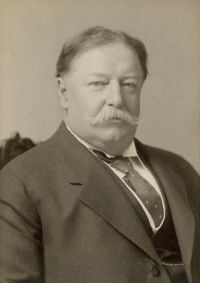
Portrait of William Howard Taft William Howard Taft Cherokee Nation v. United States…

When we consider the rule requiring an express provision of contract or statute to justify the imposition of interest in adjudicating any claim against the United States, we can find nothing in the circumstances of this case to increase the interest as adjudged. The additional interest now claimed is sought really as damages for the delay of Congress in appropriating the sum due in 1895 as the United States promised in the 1891 agreement. But the rule as to interest against the United States does not allow us to adjudge interest as damages at all.
Source: Wikisource

Portrait of William Howard Taft William Howard Taft Cherokee Nation v. United States…

The Cherokee Nation has parted with the land, has lost the time within which it might have appealed to the courts, and has lost the right to bring the items which it regards as incorrectly or unjustly disallowed to judicial arbitrament, and the United States are placed in the position of having broken and evaded the letter and spirit of their agreement.' All this, however, was directed to the question of the liability of the United States to pay the principal debt.
Source: Wikisource

Portrait of William Howard Taft William Howard Taft Cherokee Nation v. United States…

As this was more favorable than it should have been to the Cherokees, they can not complain. On this appeal, under the act of 1919, and in compliance with its requirement, we hold that there is no more interest due to the Cherokees beyond that which they have already received. The government is not in a position, in view of the fact that the errors referred to have been embodied in legislation, and the overpayments have been made by direction of Congress, to seek to recover them back. Indeed it has not attempted to do so.
The judgment of the Court of Claims is affirmed.
Source: Wikisource

Get perspective with Kwize: daily news enlightened by great literature