Summary

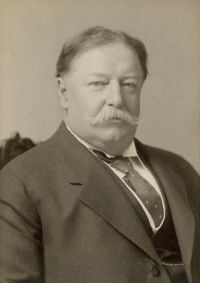
Portrait of William Howard Taft William Howard Taft Coronado Coal Company v. United Mine Workers of America…

In our previous opinion we declined to hold that the mere elimination from interstate trade of 5,000 tons a week, which we took to be the practical limit of capacity of the plaintiffs, was significant in the total tonnage of the country or state, or that its stoppage furnished a basis of itself for inferring a palpable and intentional restraint of interstate trade with which the defendants could be charged even though coal could be produced at a reduced cost under nonunion conditions.
Source: Wikisource

Portrait of William Howard Taft William Howard Taft Coronado Coal Company v. United Mine Workers of America…

We think there was substantial evidence at the second trial in this case tending to show that the purpose of the destruction of the mines was to stop the production of nonunion coal and prevent its shipment to markets of other states than Arkansas, where it would by competition tend to reduce the price of the commodity and affect injuriously the maintenance of wages for union labor in competing mines, and that the direction by the District Judge to return a verdict for the defendants other than the International Union was erroneous.
Source: Wikisource

Portrait of William Howard Taft William Howard Taft Coronado Coal Company v. United Mine Workers of America…

The possible total to which their production might be brought was testified to by a number of new expert witnesses who were familiar with the mines and the business of mining and selling coal in the markets of the neighboring states. The conclusion of some of these witnesses was that with the union restrictions removed and a regular demand for the coal, the capacity of all the mines, owned and leased by the plaintiffs, those destroyed and those uninjured, could have been increased to substantially more than 5,000 tons a day.
Source: Wikisource

Get perspective with Kwize: daily news enlightened by great literature