Summary

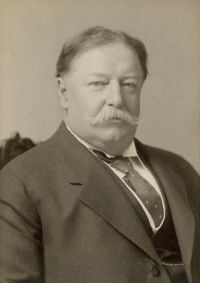
Portrait of William Howard Taft William Howard Taft Fairmont Creamery Company v. Minnesota…

The dissent was based on the ground that no costs could be imposed by this court by rule without specific authority of a statute.
It is insisted that, while in civil cases costs may be awarded against a state as a litigant before this court, the rule does not apply in criminal cases. As the objection to taxing costs against a state has been because of its sovereign character, and that, as we have said, has no application to a state as a litigant it this court, there would seem to be no more reason for immunity in a criminal case than in a civil one.
Source: Wikisource

Portrait of William Howard Taft William Howard Taft Fairmont Creamery Company v. Minnesota…

It provides that there shall be 'taxed against the losing party in each and every cause pending in the Supreme Court' the cost of printing the record, except when the judgment is against the United States. This exception of the United States in the section with its emphatic inclusion of every other litigant shows that a state as litigant must pay the costs of printing, if it loses, in every case, civil or criminal. These costs constitute a large part of all the costs. The section certainly constitutes pro tanto statutory authority to impose costs generally against a state if defeated.
Source: Wikisource

Portrait of William Howard Taft William Howard Taft Fairmont Creamery Company v. Minnesota…

The judgment of this court turned on the fact that such prerequisites had not been complied with. The language of the court indicated that costs could only be awarded in accordance with the statute of the state of Tennessee. We do not think that the case on its facts is an authority here. There was a peculiar and exceptional situation. The case was a prosecution by the state of Tennessee, and its trial by the state was bodily transferred to the environment of the Circuit Court of the United States.
Source: Wikisource

Get perspective with Kwize: daily news enlightened by great literature