Summary

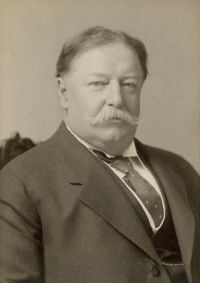
Portrait of William Howard Taft William Howard Taft Goltra v. Weeks — Opinion of the Court

If it was a trespass, then the officers of the government should be restrained whether they professed to be acting for the government or not. Neither they nor the government which they represent could trespass upon the property of another, and it is well settled that they may be stayed in their unlawful proceeding by a court of competent jurisdiction, even though the United States for whom they may profess to act is not a party and can not be made one.
Source: Wikisource

Portrait of William Howard Taft William Howard Taft Goltra v. Weeks — Opinion of the Court

Theoretically, everybody in this land is subject to the law. But of what value is the theory, if performances like those revealed by this record go unrebuked? An army officer, having inflated himself into judge and executioner, decided that a fleet of towboats and barges lying in the Mississippi river at St. Louis ought no longer to remain in the custody of a private citizen, who held possession of them under a solemn lease and contract of sale from the United States, and who, in order to make them operative, had expended upon them $40,000 of his own money.
Source: Wikisource

Portrait of William Howard Taft William Howard Taft Goltra v. Weeks — Opinion of the Court

Of course the Chief Engineer is not the real party in interest. He is a professional expert, as such was designated as lessor, and is really acting only as an agent for the government. But, even if this were a stipulation between private individuals, judgment of one of the parties on such an issue would be in the absence of bad faith conclusive. There are many cases where the contract makes the satisfaction of one of the parties in respect to compliance the condition precedent to fulfillment, and good faith is all that is required to justify rejection of work or product tendered.
Source: Wikisource

Get perspective with Kwize: daily news enlightened by great literature