Summary

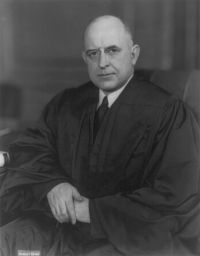
Portrait of Stanley Forman Reed Stanley Forman Reed United States v. Goltra Goltra…

Without controverting this general rule, the executors find authority for the allowance of interest in the provision of the jurisdictional act for 'just compensation * * * for certain vessels and unloading apparatus taken, whether tortiously or not * * *, for the use and befefit of the United States.' Their argument is that the words 'just compensation' have within themselves the same legal significance of interest on the award or damages from the date of the taking as has been given to these same words in the Fifth Amendment.
Source: Wikisource

Portrait of Stanley Forman Reed Stanley Forman Reed United States v. Goltra Goltra…

Acts of government officials in taking property without authorization of Congress confer no right of recovery upon the injured citizen. [11] There are two instances of Congressional ratification of takings which turned tortious acts into the exercise of the power of eminent domain and placed upon the Government the duty to make 'just compensation,' including sums in the nature of interest. These are United States v. Creek Nation [12] and Shoshone Tribe v. United States. [13] In both cases there was a special jurisdictional act.
Source: Wikisource

Portrait of Stanley Forman Reed Stanley Forman Reed United States v. Goltra Goltra…

Goltra may not have had fair treatment. It passed the present jurisdictional act and to that the executors are relegated to find authority to allow interest.
Such acts are to be strictly construed. [20] In the preceding paragraphs we have demonstrated that this unauthorized taking and judicially approved retention was in no sense an exercise of the power of eminent domain. We see no ground to read into this act of grace, which was apparently drawn to rectify what Congress felt might be a wrong, an authority to allow interest as a part of just compensation.
Source: Wikisource

Get perspective with Kwize: daily news enlightened by great literature