Summary

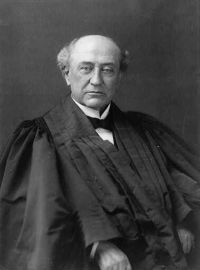
Portrait of David Josiah Brewer David Josiah Brewer United States v. Lynah — Opinion of the Court

I freely admit that, if property were seized or taken by officers of the government without authority of law, or subsequent ratification, by taking possession or occupying property for public use, there could be no recovery, since neither the government nor any other principal is bound by the unauthorized acts of its agents. But in endeavoring to raise an implied contract to pay for an ordinary trespass to real estate, I think the opinion of the court misconceives the true source of our jurisdiction.
Source: Wikisource

Portrait of David Josiah Brewer David Josiah Brewer United States v. Lynah — Opinion of the Court

There have been many cases in which a distinction has been drawn between the taking of property for public uses and a consequential injury to such property, by reason of some public work. In the one class the law implies a contract, a promise to pay for the property taken, which, if the taking was by the general government, will uphold an action in the court of claims; while in the other class there is simply a tortious act doing injury, over which the court of claims has no jurisdiction.
Source: Wikisource

Portrait of David Josiah Brewer David Josiah Brewer United States v. Lynah — Opinion of the Court

When the government owns property, or claims to own it, it deals with it as owner and by virtue of its ownership, and if an officer of the government takes possession of property under the claim that it belongs to the government (when in fact it does not) , that may well be considered a tortious act on his part, for there can be no implication of an intent on the part of the government to pay for that which it claims to own. Very different from this proprietary right of the government in respect to property which it owns is its governmental right to appropriate the property of individuals.
Source: Wikisource

Get perspective with Kwize: daily news enlightened by great literature