Summary

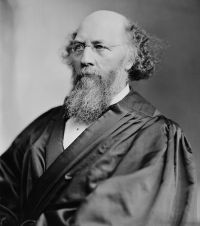
Portrait of Stephen Johnson Field Stephen Johnson Field United States v. Pacific Railroad Railroad Pacific Railroad Railroad…

The war, whether considered with reference to the number of troops in the field, the extent of military operations, and the number and character of the engagements, attained proportions unequaled in the history of the present century. More than a million of men were in the armies on each side. The injury and destruction of private property caused by their operations, and by measures necessary for their safety and efficiency, were almost beyond calculation. For all injuries and destruction which followed necessarily from these causes no compensation could be claimed from the government.
Source: Wikisource

Portrait of Stephen Johnson Field Stephen Johnson Field United States v. Pacific Railroad Railroad Pacific Railroad Railroad…

Military necessity will justify the destruction of property, but will not compel private parties to erect on their own lands works needed by the government, or to pay for such works when erected by the government. The cost of building and repairing roads and bridges to facilitate the movements of troops, or the transportation of supplies and munitions of war, must therefore be borne by the government.
Source: Wikisource

Portrait of Stephen Johnson Field Stephen Johnson Field United States v. Pacific Railroad Railroad Pacific Railroad Railroad…

A house built for a barrack, or for the storage of supplies, or for a temporary fortification, might be converted to some purposes afterwards by the owner of the land, but that circumstance would impose no liability upon him. Whenever a structure is permanently affixed to real property belonging to an individual, without his consent or request, he cannot be held responsible because of its subsequent use. It becomes his by being annexed to the soil, and he is not obliged to remove it to escape liability.
Source: Wikisource

Get perspective with Kwize: daily news enlightened by great literature