Summary

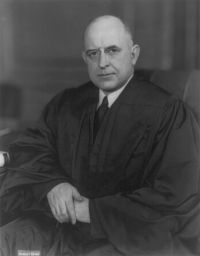
Portrait of Stanley Forman Reed Stanley Forman Reed American Stevedores v. Porello…

It may be that the parties only meant American to indemnify the United States should the Government be held liable for damages solely caused by American's negligence. It may be that the intention was that American should fully reimburse the United States for all damages caused in any part by American's negligence. Finally, the parties may have intended that American, in case of the joint negligence of the parties, should be responsible for that proportion of the damages which its fault bore to the total fault.
Source: Wikisource

Portrait of Stanley Forman Reed Stanley Forman Reed American Stevedores v. Porello…

The employee thus receives compensation payments quite soon after his injury by force of the Act. Yet the Act does not put a time limitation upon the period during which an employee must elect to receive compensation or to sue, save the general limitation of one year upon the time to make a claim for compensation. [22] The apparent purpose of the Act is to provide payments during the period while the employee is unable to earn, when they are sorely needed, without compelling him to give up his right to sue a third party when he is least fit to make a judgment of election.
Source: Wikisource

Portrait of Stanley Forman Reed Stanley Forman Reed American Stevedores v. Porello…

Here the death occurred on navigable waters of New York, which has a statute granting a right of action for damages on account of wrongful death. Nor can damages suffered on account of death be distinguished from damages on account of personal injuries. Death is the supreme personal injury. For the reasons stated in the Porello case we conclude that the word 'damages' in the Public Vessels Act, § 1, 46 U.S.C. § 781, 46 U.S.C.A. § 781, means damages under §§ 130-134 of the New York Decedent Estate Law.
Source: Wikisource

Get perspective with Kwize: daily news enlightened by great literature