Summary

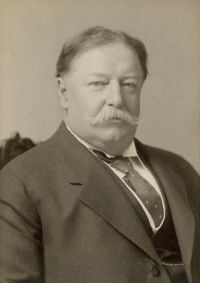
Portrait of William Howard Taft William Howard Taft Thornton v. United States — Opinion of the Court

It is very evident, from the act of 1884 and the subsequent legislation and the regulations issued under them, that everything authorized to be done was expressly intended to prevent the spread of disease from one state to another by contagion, which, of course, means by the passage of diseased cattle from one state to another. This is interstate commerce.
Source: Wikisource

Portrait of William Howard Taft William Howard Taft Thornton v. United States — Opinion of the Court

In the broad provisions of the legislation we have quoted, the authority of the Secretary of Agriculture to direct the employees of the Bureau of Animal Industry to engage in quarantine measures and the inspection of animals suspected of or known to have communicable diseases is not limited to cases in which there is co-operation between the United States and the state authorities in the suppression of the spread of disease among cattle, the one as between states and the other as within a state.
Source: Wikisource

Portrait of William Howard Taft William Howard Taft Thornton v. United States — Opinion of the Court

The requirement of dipping was a reasonable condition of allowing cattle from a suspected district to pass into another state, and the provision of dipping vats and other means of complying with this requirement in a border county by the United States, and the supervision of such dipping by federal employees, and indeed the dipping itself by them, were conveniences promoting interstate commerce where quarantine was necessary. There is no evidence that federal employees took part in enforcing dipping of all cattle of the county.
Source: Wikisource

Get perspective with Kwize: daily news enlightened by great literature