Summary

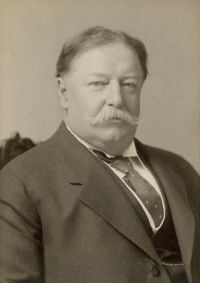
Portrait of William Howard Taft William Howard Taft United States v. Lanza — Opinion of the Court

The first section of the amendment, the one embodying the prohibition, is operative throughout the entire territorial limits of the United States, binds all legislative bodies, courts, public officers and individuals within those limits, and of its own force invalidates every legislative act whether by Congress, by a state Legislature, or by a territorial assembly-which authorizes or sanctions what the section prohibits.
Source: Wikisource

Portrait of William Howard Taft William Howard Taft United States v. Lanza — Opinion of the Court

One ground urged was that, as the coinage of the dollar was intrusted by the Constitution to Congress, it had authority to protect it against false coins by prohibiting not only the act of making them, but also the act of uttering them. It was contended that if the state could denounce the uttering, there would be concurrent jurisdiction in the United States and the state, a conviction in the state court would be a bar to prosecution in a federal court, and thus a state might confuse or embarrass the federal government in the exercise of its power to protect its lawful coinage.
Source: Wikisource

Portrait of William Howard Taft William Howard Taft United States v. Lanza — Opinion of the Court

We have here two sovereignties, deribing power from different sources, capable of dealing with the same subjectmatter within the same territory. Each may, without interference by the other, enact laws to secure prohibition, with the limitation that no legislation can give validity to acts prohibited by the amendment. Each government in determining what shall be an offense against its peace and dignity is exercising its own sovereignty, not that of the other.
Source: Wikisource

Get perspective with Kwize: daily news enlightened by great literature