Summary

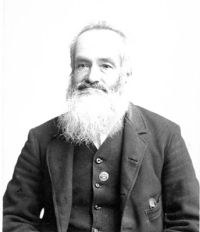
Portrait of William Muir William Muir The Caliphate: Its Rise, Decline and Fall…

Alexandria was thus a European, rather than an Egyptian, city.
Egypt disaffected towards Byzantine rule.
It was otherwise with the rich valley beyond. Emerging from the luxurious city, the traveller dropped at once from the pinnacle of civilisation to the dreary wastes of Monasticism, and the depths of poverty and squalor. Egypt was then, as ever, the servant of nations. The overflowing produce of well-watered fields served but to feed the great cities of the empire. And the people of the soil, ground down by exaction and oppression, were ever ready to rise against their rulers.
Source: Wikisource

Portrait of William Muir William Muir The Caliphate: Its Rise, Decline and Fall…

On the Caliph's visit to Syria, he urged a descent upon Egypt, at once to enfeeble the enemy's power and augment their own. The advice was good; for Egypt, once the granary of Rome, now fed Constantinople with corn. Alexandria, though inhabited largely by natives, drew its population from every quarter. It was the second city in the Empire, the seat of commerce, luxury, and letters. Greeks and Armenians, Arabs and Copts, Christians, Jews, and Syrians, mingled here on common ground.
Source: Wikisource

Portrait of William Muir William Muir The Caliphate: Its Rise, Decline and Fall…

The poll-tax was on heads of families only; the land-tax on both men and women. To equalise matters there was a special tax for those engaged in trades. The corn-tax consisted, as a rule, of wheat, sometimes of barley. In addition to these, personal service was sometimes demanded by the government. This was not the corvée or forced labour, for those impressed received wages. A common demand was for sailors, and for this persons of all trades and callings were taken. The bulk of the ordinary taxation went for the support of the Arabs resident in Egypt
Source: Wikisource

Get perspective with Kwize: daily news enlightened by great literature