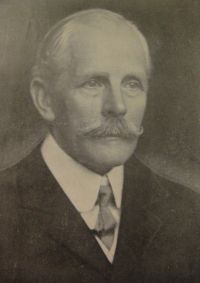
Alfred Joshua Butler

Alfred Joshua Butler

Summary

Portrait of Alfred Joshua Butler Alfred Joshua Butler 1911 Encyclopædia Britannica (1911)

The scriptures were translated into Coptic not later than the 4th century. A religion founded on morality and with a clear doctrine of life after death was especially congenial to the Egyptians; thus the lower orders in the country embraced Christianity fervently, while the Alexandrian pagans were lost in philosophical speculation and Neoplatonism was spread amongst the rich “Greek” landowners; these last, partly out of religious enthusiasm, partly from greed, annoyed and oppressed their Christian peasantry. Egypt was then terribly impoverished
Source: Wikisource

Portrait of Alfred Joshua Butler Alfred Joshua Butler 1911 Encyclopædia Britannica (1911)

The history of the Copts consists on the one hand of the record of religious strife, of growing scandals in the church, such as simony, and attempted reforms; and on the other hand of persecutions at the hands of the Moslems. As examples of the severity of the persecutions, it may be noted that, in the 8th century, the monks not only were compelled to pay a capitation tax, but were branded with name and number, civilians were oppressed with heavy taxation, churches demolished, pictures and crosses destroyed (722–723) . Degrading dresses were imposed upon the Christians (849–850)
Source: Wikisource

Portrait of Alfred Joshua Butler Alfred Joshua Butler 1911 Encyclopædia Britannica (1911)

But, with the extension of railways and agricultural roads and the increased facilities of communication and prosperity, there has been a great influx of Italian, Greek, Armenian and other Levantine workmen, who, with their better tools, are undoubtedly superior to the Copts, and have proved most formidable rivals. Furthermore, the importation of cheap European wares of every description is slowly killing all native industry.
Source: Wikisource

Get perspective with Kwize: daily news enlightened by great literature