Summary

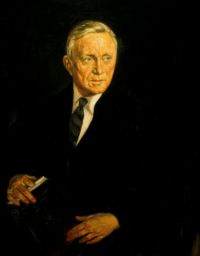
Portrait of William O. Douglas William O. Douglas Anderson v. Abbott — Opinion of the Court

If the judicial power is helpless to protect a legislative program from schemes for easy avoidance, then indeed it has become a handy implement of high finance. Judicial interference to cripple or defeat a legislative policy is one thing; judicial interference with the plans of those whose corporate or other devices would circumvent that policy is quite another. Once the purpose or effect of the scheme is clear, once the legislative policy is plain, we would indeed forsake a great tradition to say we were helpless to fashion the instruments for appropriate relief.
Source: Wikisource

Portrait of William O. Douglas William O. Douglas Anderson v. Abbott — Opinion of the Court

If the new stockholders for cash are liable it is hard to see why the old ones have not found a substitute, and if the Bank of Kentucky stockholders have not found a substitute, it is difficult to see a basis on which the new stockholders are liable.
Stock purchasers for cash have at no time owned a stock that purported to carry double liability. On the contrary, by the terms of the stock certificates and by the law of the corporation's being, their shares were fully paid and nonassessable.
Source: Wikisource

Portrait of William O. Douglas William O. Douglas Anderson v. Abbott — Opinion of the Court

Instead of considering whether to disregard the transfer the Court disregards the corporate entity of the holding company because it says these obligations arise from legislative policy. Even if we could find such a policy, legislative liabilities are numerous. It is probably a legislative policy that a corporation shall pay all of its debts. The reasoning employed by the Court, we should think, would leave it uncertain whether stockholders may not be liable for many other types of indebtedness.
Source: Wikisource

Get perspective with Kwize: daily news enlightened by great literature