Summary

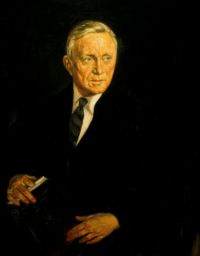
Portrait of William O. Douglas William O. Douglas Canton Railroad Company v. Rogan…

The evident policy of the Constitution is to avoid these burdens and maintain free and equal access to foreign ports for the inland areas. If the constitutional policy can be avoided by shifting the tax from the exported article itself to some incident such as carriage, unavoidable in the process of exportation, then the policy is a practical nullity. I think prohibition of a tax on exports and imports goes beyond exempting specific articles from direct ad valorem duties-it prohibits taxing exports and imports as a process.
Source: Wikisource

Portrait of William O. Douglas William O. Douglas Canton Railroad Company v. Rogan…

Congress, the Interstate Commerce Commission, this Court, and American rail and motor carriers have all concurred in the development of rate structures on the premise that exports are to be recognized as such from the time they are delivered to the carrier for export and not merely when they reach the water's edge. There is a wealth of statutory material relating to the carriage of goods for export by railroads, motor carriers, and shipping companies. Railroads have established lawful tariffs for export goods substantially less than for like goods destined for local markets.
Source: Wikisource

Get perspective with Kwize: daily news enlightened by great literature