Summary

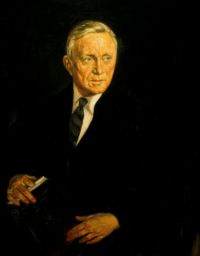
Portrait of William O. Douglas William O. Douglas Evans v. Newton — Opinion of the Court

One is the right of the individual to pick his own associates so as to express his preferences and dislikes, and to fashion his private life by joining such clubs and groups as he chooses. The other is the constitutional ban in the Equal Protection Clause of the Fourteenth Amendment against state-sponsored racial inequality, which of course bars a city from acting as trustee under a private will that serves the racial segregation cause.
Source: Wikisource

Portrait of William O. Douglas William O. Douglas Evans v. Newton — Opinion of the Court

We only hold that where the tradition of municipal control had become firmly established, we cannot take judicial notice that the mere substitution of trustees instantly transferred this park from the public to the private sector.
This conclusion is buttressed by the nature of the service rendered the community by a park. The service rendered even by a private park of this character is municipal in nature. It is open to every white person, there being no selective element other than race.
Source: Wikisource

Portrait of William O. Douglas William O. Douglas Evans v. Newton — Opinion of the Court

The range of government activities is broad and varied, and the fact that government has engaged in a particular activity does not necessarily mean that an individual entrepreneur or manager of the same kind of undertaking suffers the same constitutional inhibitions. While a State may not segregate public schools so as to exclude one or more religious groups, those sects may maintain their own parochial educational systems.
Source: Wikisource

Get perspective with Kwize: daily news enlightened by great literature