Summary

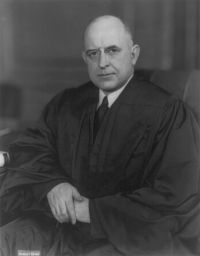
Portrait of Stanley Forman Reed Stanley Forman Reed Greenough v. Tax Assessors of City of Newport…

But when it is applied to the split ownership of a trust, not only as between trustee and beneficiary but also as among several trustees, to bring the trust res within the several states' powers of taxation, merely by virtue of the residence in each of one trustee and nothing more, the fiction I think is carried too far. Something more than affording a domiciliary basis for service of process, coupled with the split and qualified representative ownership of such a trustee, should be required to sustain the state's power to tax the trust res, whether for all or only a fraction of its value.
Source: Wikisource

Portrait of Stanley Forman Reed Stanley Forman Reed Greenough v. Tax Assessors of City of Newport…

Does a similar relationship exist between a trustee and the intangibles of a trust?
The trustee of today moves freely from state to state. The settlor's residence may be one state, the seat of a trust another state and the trustee or trustees may live in still another jurisdiction or may constantly change their residence. [16] The official life of a trustee is, of course, different from his personal. A trust, this Court has said, is 'an abstraction.' In federal income tax purposes it is sometimes dealt with as though it had a separate existence.
Source: Wikisource

Portrait of Stanley Forman Reed Stanley Forman Reed Greenough v. Tax Assessors of City of Newport…

If Rhode Island had laid a tax on one of its citizens individually, I should think it unassailable even if the basis for taxing him was that he held this trusteeship, and perhaps the tax on him could be measured by the value of the trust estate. In that case the state would tax only its own citizen. One is pretty much at the mercy of his own state as to the events or relationship for which it will tax him.
Source: Wikisource

Get perspective with Kwize: daily news enlightened by great literature