Summary

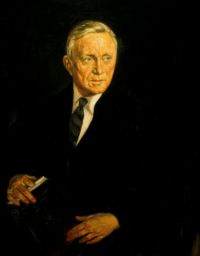
Portrait of William O. Douglas William O. Douglas Follett v. Town of McCormick — Opinion of the Court

Preachers of the more orthodox faiths are not engaged in commercial undertakings because they are dependent on their calling for a living. Whether needy or affluent, they avail themselves of the constitutional privilege of a 'free exercise' of their religion when they enter the pulpit to proclaim their faith. The priest or preacher is as fully protected in his function as the parishioners are in their worship. A flat license tax on that constitutional privilege would be as odious as the early 'taxes on knowledge' which the framers of the First Amendment sought to outlaw.
Source: Wikisource

Portrait of William O. Douglas William O. Douglas Follett v. Town of McCormick — Opinion of the Court

The protection of the First Amendment is not restricted to orthodox religious practices any more than it is to the expression of orthodox economic views. He who makes a profession of evangelism is not in a less preferred position than the casual worker.
This does not mean that religious undertakings must be subsidized. The exemption from a license tax of a preacher who preaches or a parishioner who listens does not mean that either is free from all financial burdens of government, including taxes on income or property. We said as much in the Murdock case, 319 U.S. page 112, 63 S.Ct.
Source: Wikisource

Get perspective with Kwize: daily news enlightened by great literature