Summary

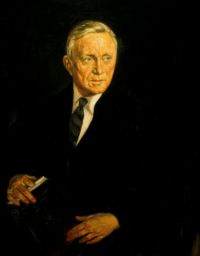
Portrait of William O. Douglas William O. Douglas Garner v. Louisiana — Concurrence

I do not believe that a State that licenses a business can license it to serve only whites or only blacks or only yellows or only browns. Race is an impermissible classification when it comes to parks or other municipal facilities by reason of the Equal Protection Clause of the Fourteenth Amendment. By the same token, I do not see how a State can constitutionally exercise its licensing power over business either in terms or in effect to segregate the races in the licensed premises. The authority to license a business for public use is derived from the public.
Source: Wikisource

Portrait of William O. Douglas William O. Douglas Garner v. Louisiana — Concurrence

But one who operates an enterprise under a license from the government enjoys a privilege that derives from the people. Whether retail stores, not licensed by the municipality, stand on a different footing is not presented here. But the necessity of a license shows that the public has rights in respect to those premises. The business is not a matter of mere private concern. Those who license enterprises for public use should not have under our Constitution the power to license it for the use of only one race.
Source: Wikisource

Portrait of William O. Douglas William O. Douglas Garner v. Louisiana — Concurrence

It is my view that a State may not constitutionally enforce a policy of segregation in restaurant facilities. Some of the argument assumed that restaurants are 'private' property in the sense that one's home is 'private' property. They are, of course, 'private' property for many purposes of the Constitution. Yet so are street railways, power plants, warehouses, and other types of enterprises which have long been held to be affected with a public interest. Where constitutional rights are involved, the proprietary interests of individuals must give way.
Source: Wikisource

Get perspective with Kwize: daily news enlightened by great literature