Summary

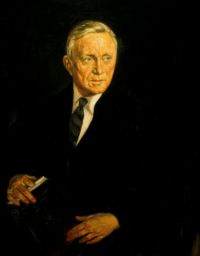
Portrait of William O. Douglas William O. Douglas Gideon v. Wainwright — Concurring Opinion

Justices Bradley, Swayne and Field emphasized that the first eight Amendments granted citizens of the United States certain privileges and immunities that were protected from abridgment by the States by the Fourteenth Amendment. See Slaughter-House Cases, supra, at 118-119; O'Neil v. Vermont, supra, at 363. Justices Harlan and Brewer accepted the same theory in the O'Neil case (see id. at 370-371) , though Justice Harlan indicated that all "persons," not merely "citizens," were given this protection.
Source: Wikisource

Portrait of William O. Douglas William O. Douglas Gideon v. Wainwright — Concurring Opinion

Erie R. Co. v. Tompkins, 304 U.S. 64. And what we do today does not foreclose the matter.
My Brother HARLAN is of the view that a guarantee of the Bill of Rights that is made applicable to the States by reason of the Fourteenth Amendment is a lesser version of that same guarantee as applied to the Federal Government. [2] Mr. Justice Jackson shared that view. [3] [p347] But that view has not prevailed, [4] and rights protected against state invasion by the Due Process Clause of the Fourteenth Amendment are not watered-dow versions of what the Bill of Rights guarantees.
Footnotes
↑ .
Source: Wikisource

Portrait of William O. Douglas William O. Douglas Gideon v. Wainwright — Concurring Opinion

That view was also expressed by Justices Bradley and Swayne in the Slaughter-House Cases, 16 Wall. 36, 118-119, 122, and seemingly was accepted by Justice Clifford when he dissented with Justice Field in Walker v. Sauvinet, 92 U.S. 90, 90, 92. [1] Unfortunately, it has never commanded a Court. Yet, happily, all constitutional questions are always open.
Source: Wikisource

Get perspective with Kwize: daily news enlightened by great literature