Summary

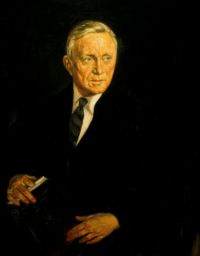
Portrait of William O. Douglas William O. Douglas Gusik v. Schilder — Opinion of the Court

We read the finality clause of Article 53 as doing no more than describing the terminal point for proceedings within the court-martial system. If Congress had intended to deprive the civil courts of their habeas corpus jurisdiction, which has been exercised from the beginning, [3] the break with history would have been so marked that we believe the purpose would have been made plain and unmistakable. The finality language so adequately serves the more restricted purpose that we would have to give a strained construction in order to stir the constitutional issue that is tendered.
Source: Wikisource

Portrait of William O. Douglas William O. Douglas Gusik v. Schilder — Opinion of the Court

The policy underlying that rule is as pertinent to the collateral attack of military judgments as it is to collateral attack of judgments rendered in state courts. If an available procedure has not been employed to rectify the alleged error which the federal court is asked to correct, any interference by the federal court may be wholly needless.
Source: Wikisource

Portrait of William O. Douglas William O. Douglas Gusik v. Schilder — Opinion of the Court

That Order states that the new Manual shall be in force and effect on and after February 1, 1949 'with respect to all court-martial processes taken on or after February 1, 1949.' A petition for a new trial under Article 53 is such a process.
If Article 53 had been in force when the habeas corpus proceedings were instituted, the District Court would not have been justified in entertaining the petition unless the remedy afforded by the Article had first been exhausted. An analogy is a petition for habeas corpus in the federal court challenging the jurisdiction of a state court.
Source: Wikisource

Get perspective with Kwize: daily news enlightened by great literature