Summary

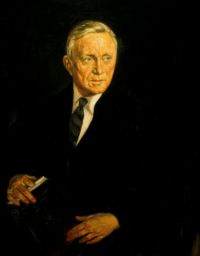
Portrait of William O. Douglas William O. Douglas Harrington v. California — Opinion of the Court

By that test we cannot impute reversible weight to the two confessions.
We do not depart from Chapman; nor do we dilute it by inference. We reaffirm it. We do not suggest that, if evidence bearing on all the ingredients of the crime is tendered, the use of cumulative evidence, though tainted, is harmless error. Our decision is based on the evidence in this record. The case against Harrington was not woven from circumstantial evidence. It is so overwhelming that unless we say that no violation of Bruton can constitute harmless error, we must leave this state conviction undisturbed.
Source: Wikisource

Portrait of William O. Douglas William O. Douglas Harrington v. California — Opinion of the Court

Petitioner argues that it is irrelevant that he was not named in Cooper's and Bosby's confessions, that reference to 'the white guy' made it as clear as pointing and shouting that the person referred to was the white man in the dock with the three Negroes. We make the same assumption. But we conclude that on these special facts the lack of opportunity to cross-examine Cooper and Bosby constituted harmless error under the rule of Chapman.
Rhone, whom Harrington's counsel cross-examined, placed him in the store with a gun at the time of the murder. Harrington himself agreed he was there.
Source: Wikisource

Get perspective with Kwize: daily news enlightened by great literature