Summary

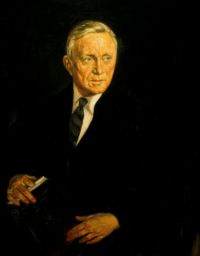
Portrait of William O. Douglas William O. Douglas Lathrop v. Donohue — Dissent

This would be adopting all the vices of democracy without the reasonable hope in common sense of securing any of its virtues. It would be forcing the democratic dogma of mass or majority rule to a dangerous and pernicious extreme.
'Although in political democrary the rule of the majority is necessary, the American system of democracy is based upon the recognition of the imperative necessity of limitations upon the will of the majority.
Source: Wikisource

Portrait of William O. Douglas William O. Douglas Lathrop v. Donohue — Dissent

Of course any group purports to serve a group cause. A medical association that fights socialized medicine protects the fees of the profession. Yet not even an immediate cause of that character is served by the integrated bar. Its contribution is in policing the members of the legal profession and in promoting what the majority of the Bar thinks is desirable legislation.
Source: Wikisource

Portrait of William O. Douglas William O. Douglas Lathrop v. Donohue — Dissent

Thus the First Amendment, made applicable to the States by the Fourteenth, is brought into play. And for the reasons stated by Mr. Justice BLACK, I think all issues in the case are ripe for decision.
If the State can compel all lawyers to join a guild, I see no reason why it cannot make the same requirement of doctors, dentists, and nurses. They too have responsibilities to the public; and they also have interests beyond making a living. The groups whose activities are or may be deemed affected with a public interest are indeed numerous. Teachers are an obvious example.
Source: Wikisource

Get perspective with Kwize: daily news enlightened by great literature