Summary

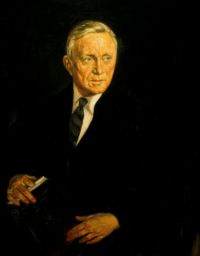
Portrait of William O. Douglas William O. Douglas McKeiver v. Pennsylvania — Dissent

The experience of a trial with or without a jury is meant to be impressive and meaningful. The fact that a juvenile realizes that his case will be decided by twelve objective citizens would allow the court to retain its meaningfulness without causing any more trauma than a trial before a judge who perhaps has heard other cases involving the same juvenile in the past and may be influenced by those prior contacts. To agree that a jury trial would expose a juvenile to a traumatic experience is to lose sight of the real traumatic experience of incarceration without due process.
Source: Wikisource

Portrait of William O. Douglas William O. Douglas McKeiver v. Pennsylvania — Dissent

The Fourteenth Amendment, which makes trial by jury provided in the Sixth Amendment applicable to the States, speaks of denial of rights to 'any person,' not denial of rights to 'any adult person'; and we have held indeed that where a juvenile is charged with an act that would constitute a crime if committed by an adult, he is entitled to be tried under a standard of proof beyond a reasonable doubt.
Source: Wikisource

Portrait of William O. Douglas William O. Douglas McKeiver v. Pennsylvania — Dissent

The fact is that the procedures which are now followed in juvenile cases are far more traumatic than the potential experience of a jury trial. Who can say that a boy who is arrested and handcuffed, placed in a lineup, transported in vehicles designed to convey dangerous criminals, placed in the same kind of a cell as an adult, deprived of his freedom by lodging him in an institution where he is subject to be transferred to the state's prison and in the 'hole' has not undergone a traumatic experience?
Source: Wikisource

Get perspective with Kwize: daily news enlightened by great literature