Summary

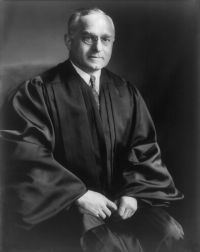
Portrait of Felix Frankfurter Felix Frankfurter Adams v. United States ex rel. McCann…

Were we so to hold, we would impliedly condemn the administration of criminal justice in states deemed otherwise enlightened merely because in their courts the vast majority of criminal cases are tried before a judge without a jury. To deny an accused a choice of procedure in circumstances in which he, though a layman, is as capable as any lawyer of making an intelligent choice, is to impair the worth of great Constitutional safeguards by treating them as empty verbalisms.
Source: Wikisource

Portrait of Felix Frankfurter Felix Frankfurter Adams v. United States ex rel. McCann…

But such questions are no less absent when a man pleads guilty than when he resists an accusation of crime. And not even now is it suggested that a layman cannot plead guilty unless he has the opinion of a lawyer on the questions of law that might arise if he did not admit his guilt. Plainly, the engrafting of such a requirement upon the Constitution would be a gratuitous dislocation of the processes of justice. The task of judging the competence of a particular accused cannot be escaped by announcing delusively simple rules of trial procedure which judges must mechanically follow.
Source: Wikisource

Portrait of Felix Frankfurter Felix Frankfurter Adams v. United States ex rel. McCann…

But it is quite another matter to suggest that the Constitution unqualifiedly deems an accused incompetent unless he does have the advice of counsel. If a layman is to be precluded from defending himself because the Constitution is said to make him helpless without a lawyer's assistance on questions of law which abstractly underlie all federal criminal prosecutions, it ought not to matter whether the decision he is called upon to make is that of pleading guilty or of waiving a particular mode of trial.
Source: Wikisource

Get perspective with Kwize: daily news enlightened by great literature