Summary

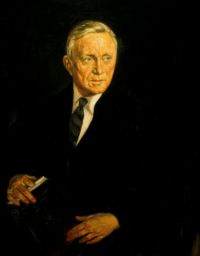
Portrait of William O. Douglas William O. Douglas Meyer v. Fleming — Opinion of the Court

We see no reason why there should be a different rule in the case of stockholders' derivative suits. They are likewise suits to enforce a corporate claim. They are one of the remedies which equity designed for those situations where the management through fraud, neglect of duty or other cause declines to take the proper and necessary steps to assert the rights which the corporation has. [11] The stockholders are then allowed to take the initiative and institute the suit which the management should have started had it performed its duty. The corporation is a necessary party.
Source: Wikisource

Portrait of William O. Douglas William O. Douglas Meyer v. Fleming — Opinion of the Court

If the trustee will not sue and the stockholder cannot continue with the litigation, what might turn out to be a valuable claim might be lost to the estate not only through the operation of statutes of limitation, but in cases like the present through a discharge of the debtor. [16] The point is that the trustee or receiver, being in a position to take control of the litigation by reason of the fact that the cause of action has become a part of the estate, should have the opportunity to make the choice which is most advantageous to the estate.
Source: Wikisource

Get perspective with Kwize: daily news enlightened by great literature