Summary

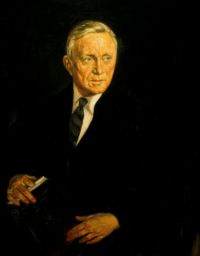
Portrait of William O. Douglas William O. Douglas Rorick v. Devon Syndicate — Opinion of the Court

Since Drennan was not a 'relative or attorney' of petitioner, he was not disqualified to take the affidavit unless within the meaning of the Ohio statute he was 'otherwise interested in the event of the action or proceeding.' The District Court held that he was so interested. We do not so interpret the Ohio law. Absent some legal or material interest, it seems to us, on the basis of the Ohio authorities which we have found, that there must be some immediate interest in the action akin to that of a relative in order for the notary to run afoul of the statutory prohibition.
Source: Wikisource

Portrait of William O. Douglas William O. Douglas Rorick v. Devon Syndicate — Opinion of the Court

Certainly, if an employee of one who himself is disqualified to act as notary is qualified so to act, an employee of a corporation whose officer is suing not on behalf of the corporation but for himself would seem to be similarly qualified under Ohio law. This seems to us especially persuasive, since the notary in question was in fact taking not a deposition but an affidavit and since the affidavit was not for use as evidence.
Source: Wikisource

Portrait of William O. Douglas William O. Douglas Rorick v. Devon Syndicate — Opinion of the Court

So to a considerable degree, this Court in pursuance of the policy of the Congress as expressed in Sec. 646, has not adhered rigorously to the philosophy underlying the antecedents of the Big Vein Coal Company case. For most assuredly a defendant whose property is attached in a state court prior to removal may not have been given notice of the kind which personal service would provide, since the state procedure as in this case commonly permits attachment or garnishment where only service by publication can be made.
Source: Wikisource

Get perspective with Kwize: daily news enlightened by great literature