Summary

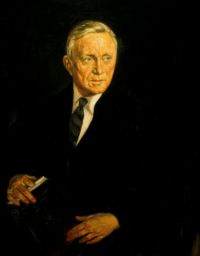
Portrait of William O. Douglas William O. Douglas State of Minnesota v. National Tea Company… (1940)

Whether in this case we thought that the state tax was repugnant to the federal constitution or consistent with it, the judgment of the state court that the tax violated the state constitution would still stand. It cannot be supposed that the Supreme Court of Minnesota is not fully conscious of its independent authority to construe the constitution of the State, whatever reasons it may adduce in so doing.
Source: Wikisource

Portrait of William O. Douglas William O. Douglas State of Minnesota v. National Tea Company… (1940)

On the other hand we cannot be content with a dismissal of the petition where there is strong indication, as here, that the federal constitution as judicially construed controlled the decision below.
If a state court merely said that the Fourteenth Amendment, as construed by this Court, is the 'supreme law of the land' to which obedience must be given, our jurisdiction would seem to be inescapable. And that would follow though the state court might have given, if it had chosen, a different construction to an identical provision in the state constitution.
Source: Wikisource

Get perspective with Kwize: daily news enlightened by great literature