Summary

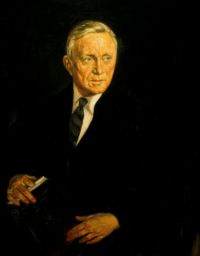
Portrait of William O. Douglas William O. Douglas Textile Mills Securities Corporation v…

For to do so would be to imply that Congress prohibited some circuit judges from participation in the most important function of the 'court' (the hearing and the decision of appeals) , though allowing all of them to perform the other functions. Such a prohibition as respects the ordinary responsibilities of a judicial office should be inferred only under compelling necessity, since a court usually will consist of all the judges appointed to it. That necessity is not present here. The ambiguity in the statute is doubtless the product of inadvertence.
Source: Wikisource

Portrait of William O. Douglas William O. Douglas Textile Mills Securities Corporation v…

Donations made by a corporation for purposes connected with the operation of its business, however, when limited to charitable institutions, hospitals, or educational institutions conducted for the benefit of its employees or their dependents are a proper deduction as ordinary and necessary expenses. Donations which legitimately represent a consideration for a benefit flowing directly to the corporation as an incident of its business are allowable deductions from gross income.
Source: Wikisource

Portrait of William O. Douglas William O. Douglas Textile Mills Securities Corporation v…

It provided, however, by § 3 of that Act that the Chief Justice and Associate Justices of the Supreme Court assigned to each circuit and the circuit judges and district judges within each circuit 'shall be competent to sit as judges of the circuit court of appeals within their respective circuits.' Thus it is apparent that the newly created circuit court of appeals was to be composed of only three judges [5] who were to be drawn from the three existing groups of judges-the circuit justice, the circuit judges, and the district judges.
Source: Wikisource

Get perspective with Kwize: daily news enlightened by great literature