Summary

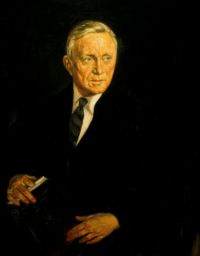
Portrait of William O. Douglas William O. Douglas United States v. Kansas City Life Insurance Company…

There is no sound reason for treating the two types of owners differently. Congress has power to regulate commerce by raising the level of a navigable stream to high-water mark without liability for compensation to any riparian owner. The effect upon the riparian owner of the river's tributaries, whether navigable or nonnavigable, is the same as that upon the owner riparian to the river itself.
Source: Wikisource

Portrait of William O. Douglas William O. Douglas United States v. Kansas City Life Insurance Company…

Landowners may build embankments, dykes, or other obstructions to stop the flow of surface water upon their land. Although it appears that under Missouri law a riparian owner may not dam a watercourse so that it is obstructed or the lands of another are flooded, [2] no authority has been brought to my attention which would indicate that the obstruction of drainage by raising the water level of a stream confers a cause of action. I had not supposed that just compensation requires the Government to pay for that which a riparian owner may freely do under state law.
Source: Wikisource

Portrait of William O. Douglas William O. Douglas United States v. Kansas City Life Insurance Company…

Basically the problem in this case is to locate a workable and reasonable boundary between Congress' power to control navigation in the public interest and the rights of landowners adjacent to navigable streams and their tributaries to compensation for injuries flowing from the exercise of that power. The Constitution does not require compensation for all injuries inflicted by the exercise of Congress' power. Neither is the power unlimited.
Source: Wikisource

Get perspective with Kwize: daily news enlightened by great literature