Summary

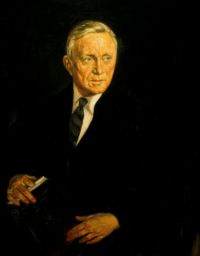
Portrait of William O. Douglas William O. Douglas Williamson v. Lee Optical Company…

An eyeglass frame, considered in isolation, is only a piece of merchandise. But an eyeglass frame is not used in isolation, as Judge Murrah said in dissent below; it is used with lenses; and lenses, pertaining as they do to the human eye, enter the field of health. Therefore, the legislature might conclude that to regulate one effectively it would have to regulate the other. Or it might conclude that both the sellers of frames and the sellers of lenses were in a business where advertising should be limited or even abolished in the public interest.
Source: Wikisource

Portrait of William O. Douglas William O. Douglas Williamson v. Lee Optical Company…

The advertiser of frames may be using his ads to bring in customers who will buy lenses. If the advertisement of lenses is to be abolished or controlled, the advertising of frames must come under the same restraints; or so the legislature might think. We see no constitutional reason why a State may not treat all who deal with the human eye as members of a profession was should use no merchandising methods for obtaining customers.
Source: Wikisource

Portrait of William O. Douglas William O. Douglas Williamson v. Lee Optical Company…

An optometrist examines eyes for refractive error, recognizes (but does not treat) diseases of the eye, and fills prescriptions for eyeglasses. The optician is an artisan qualified to grind lenses, fill prescriptions, and fit frames.
The effect of § 2 is to forbid the optician from fitting or duplicating lenses without a prescription from an ophthalmologist or optometrist. In practical effect, it means that no optician can fit old glasses into new frames or supply a lens, whether it be a new lens or one to duplicate a lost or broken lens, without a prescription.
Source: Wikisource

Get perspective with Kwize: daily news enlightened by great literature