Summary

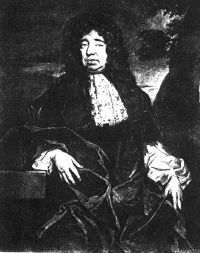
Portrait of William Petty William Petty The Economic Writings of Sir William Petty… (1899)

Sir William was, with all this, facetious and of easy conversation, friendly and courteous, and had such a faculty of imitating others that he would take a text and preach, now like a grave orthodox divine, then falling into the Presbyterian way, then to the fanatical, the Quaker, the monk and friar, the Popish priest, with such admirable action and alteration of voice and tone, as it was not possible to abstain from wonder, and one would swear to hear several persons, or forbear to think he was not in good earnest an enthusiast and almost beside himself
Source: Wikisource

Portrait of William Petty William Petty The Economic Writings of Sir William Petty… (1899)

Inasmuch as both Graunt and Petty base their estimates of London's population upon the burials reported in the bills, the numbers which they deduce must be pronounced too small, even upon the assumption of a death rate that justified them in multiplying by only thirty. But their other important deductions from the bills, such as the determination of the approximate numerical equality between the sexes, the discovery that the most healthy years are also the most fruitful, and even their calculations of the growth of the city, are far less affected by the incompleteness of the original returns.
Source: Wikisource

Portrait of William Petty William Petty The Economic Writings of Sir William Petty… (1899)

A theory of wages was not demanded by Petty's method of calculating national wealth. For that purpose he could take them as a given fact, or rather as a fact inferable from the labourer's expenditures, and as he had no conception of the problem of distribution in the modern sense and was interested rather in the aggregate number of labourers than in their individual differences, he contents himself with a passing suggestion that wages generally are the result of, and equal to, the increase which a man can effect by his labour in the spontaneous productivity of the soil [79] .
Source: Wikisource

Get perspective with Kwize: daily news enlightened by great literature