Summary

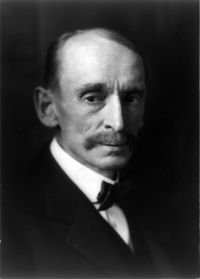
Portrait of William R. Day William R. Day Hammer v. Dagenhart — Opinion of the Court

It not only transcends the authority delegated to Congress over commerce, but also exerts a power as to a purely local matter to which the federal authority does not extend. The far-reaching result of upholding the act cannot be more plainly indicated than by pointing out that, if Congress can thus regulate matters entrusted to local authority by prohibition of the movement of commodities in interstate commerce, all freedom of commerce will be at an end, and the power of the States over local matters may be eliminated, and, thus, our system of government be practically destroyed.
Source: Wikisource

Portrait of William R. Day William R. Day Hammer v. Dagenhart — Opinion of the Court

And, concluding the discussion which sustained the authority of the Government to prohibit the transportation of liquor in interstate commerce, the court said:
. . . the exceptional nature of the subject here regulated is the basis upon which the exceptional power exerted must rest, and affords no ground for any fear that such power may be constitutionally extended to things which it may not, consistently with the guarantees of the Constitution, embrace.
Source: Wikisource

Portrait of William R. Day William R. Day Hammer v. Dagenhart — Opinion of the Court

In some of the States, laws have been passed fixing minimum wages for women, in others, the local law regulates the hours of labor of women in various employments. Business done in such States may be at an economic disadvantage when compared with States which have no such regulations; surely, this fact does not give Congress the power to deny transportation in interstate commerce to those who carry on business where the hours of labor and the rate of compensation for women have not been fixed by a standard in use in other States and approved by Congress.
Source: Wikisource

Get perspective with Kwize: daily news enlightened by great literature